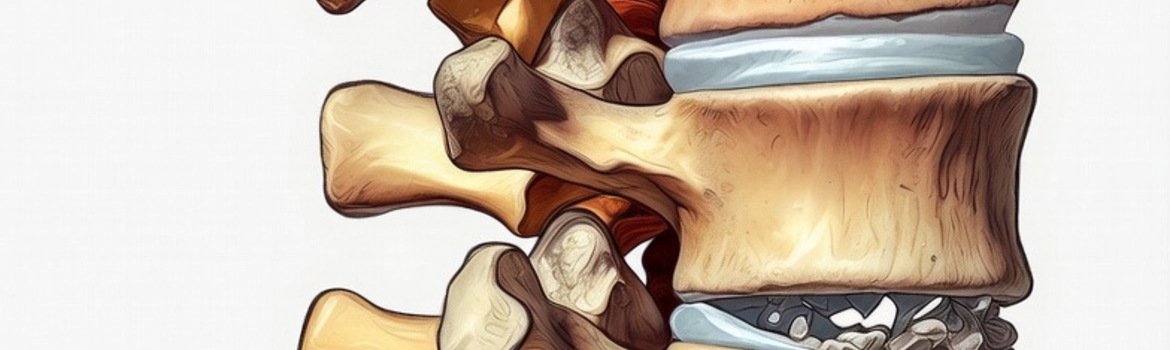
Osteochondrosis is a chronic degenerative disease of the bones and joints, most commonly affecting the spine, although in certain cases it may also involve other joint structures. The condition is associated with structural and functional changes in the intervertebral discs, which act as natural shock absorbers between the vertebrae, ensuring spinal flexibility and proper load distribution.
Over time, under the influence of various internal and external factors, intervertebral discs begin to lose moisture, elasticity, and mechanical resistance, making them more vulnerable to damage. Osteochondrosis usually progresses slowly and gradually, and early symptoms may remain mild or unnoticed for a long period.
As osteochondrosis progresses, intervertebral discs gradually dehydrate and become thinner, reducing their ability to absorb mechanical loads. As a result, increased pressure is placed on the vertebrae, which may lead to disc protrusions or herniations that compress nearby nerve roots.
In response to these degenerative changes, the body may also form osteophytes (bone spurs). These bony growths can further irritate surrounding tissues and nerves, contributing to pain, inflammation, and restricted movement.
Osteochondrosis is a multifactorial condition, resulting from the interaction of several contributing factors:
The natural aging process leads to a gradual loss of moisture and structural proteins in intervertebral discs, reducing their elasticity and resilience.
Research indicates that genetic factors may significantly influence connective tissue strength and susceptibility to disc degeneration.
Long-term heavy physical labor, repetitive movements, frequent lifting, or prolonged sitting increase spinal stress and the risk of degenerative changes.
Sustained poor posture, particularly during computer work or mobile device use, causes uneven spinal loading and accelerates disc wear.
Spinal injuries or repeated microtrauma may accelerate degenerative processes within the spine.
Excess weight increases mechanical stress on joints and the spine, while inadequate nutrition may lead to deficiencies in nutrients essential for bone and connective tissue health.
Lack of physical activity weakens the muscular support of the spine and reduces flexibility, making it less adaptable to daily mechanical demands.
Hormonal fluctuations, particularly during menopause in women, can affect bone density and disc health.
Symptoms of osteochondrosis vary depending on the affected spinal region and disease stage and may include:
Persistent or intermittent back, neck, or lower back pain
Pain radiating to the arms or legs
Muscle tension and stiffness
Reduced range of motion
Numbness or tingling in the limbs
Muscle weakness
Changes in posture or gait
Headaches, especially in cervical osteochondrosis
Because these symptoms may resemble other musculoskeletal disorders, professional medical evaluation is essential for accurate diagnosis.
Management of osteochondrosis is long-term and multidisciplinary, focusing on symptom relief, functional improvement, and slowing disease progression.
Pain relievers, anti-inflammatory medications, muscle relaxants, and, in some cases, medications for neuropathic pain may be prescribed.
Modalities such as electrotherapy, heat or cold therapy, and ultrasound help reduce pain and improve tissue function.
Individually tailored exercise programs strengthen the muscular support of the spine, improve posture, and reduce disc loading.
These approaches may help restore mobility and correct musculoskeletal imbalances.
Some patients experience reduced chronic pain following acupuncture treatments.
An important supportive treatment in osteochondrosis management.
Weight management, ergonomic adjustments, and smoking cessation are essential components of long-term care.
Surgery is considered only in severe cases where conservative treatments fail and neurological complications are present.
Massage therapy helps reduce pain, muscle tension, and inflammatory responses, improves blood circulation, and enhances oxygen delivery to tissues. Regular massage can increase range of motion, reduce stress, and improve overall well-being.
Professional massage products, such as BODY FEEL massage oils, provide optimal glide and skin comfort, supporting more effective treatment outcomes for both professionals and home use.
In addition to physical therapies, internal nutritional support plays an important role in joint, cartilage, and connective tissue health. Adequate intake of vitamins, minerals, and bioactive compounds is essential for maintaining musculoskeletal function.
In this context, orthomolecular dietary supplements designed to support joint health may be beneficial.
🔗 Omnival Arthro Norm Orthomolecular – 30-day supply
https://www.bonum.lt/omnival-arthro-norm-orthomolekular-2oh-30-dienos-doziu
This product is intended to:
support normal joint and cartilage function,
contribute to connective tissue elasticity,
help maintain overall musculoskeletal health,
supplement the daily diet with precisely balanced nutrients.
Dietary supplements should be used as part of a comprehensive care strategy and do not replace medical treatment.
Although osteochondrosis cannot always be fully prevented, its risk can be significantly reduced through consistent preventive measures:
Regular physical activity
Proper posture
Ergonomic work environment
Maintaining a healthy body weight
Balanced diet rich in calcium and vitamin D
Adequate hydration
Quality sleep and recovery
Smoking cessation
Regular consultations with healthcare professionals
Prevention requires long-term commitment but plays a key role in preserving spinal and joint health.
World Health Organization (WHO)
National Institutes of Health (NIH)
National Institute of Arthritis and Musculoskeletal and Skin Diseases
Mayo Clinic
Cleveland Clinic