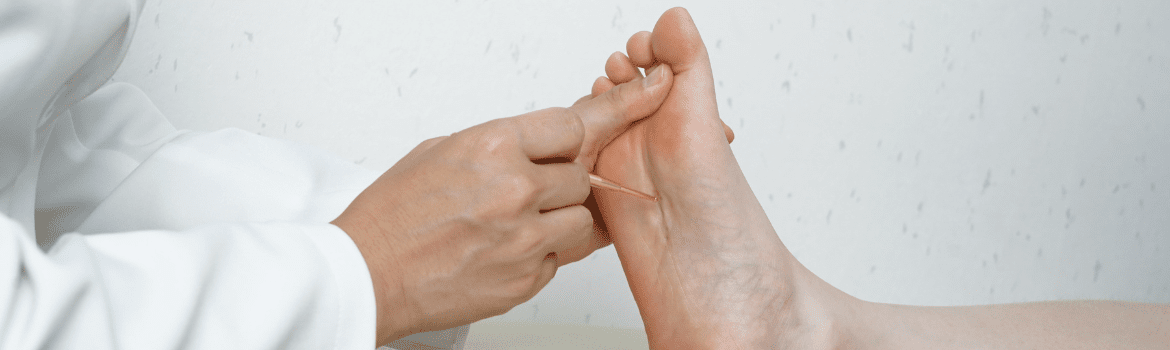
Your feet are especially important if you have diabetes.
If you have been diagnosed with diabetes, you are much more likely to experience foot problems, such as diabetic foot complications, which in severe cases can lead to amputation. However, most amputations can be prevented. By taking good care of your feet and checking them regularly, you can reduce the risk of developing foot problems.
If you want a few pointers on looking after your feet, then take our simple steps to healthy feet:
Get help to quit smoking
Manage your blood sugars (to keep blood sugar from being too high, that it would be the rate), cholesterol and blood pressure
Check your feet every day
Eat a healthy, balanced diet and stay active
Watch out cutting your nails
Make sure your footwear fits
Use moisturising cream every day
Don’t use blades or corn plasters
Get expert advice
Keep useful numbers handy
Looking after your feet on a daily basis can be tough especially if you’ve lost any sensation in them. If this is the case, it’s a good idea to speak to your healthcare team as you may need help from a podiatrist. We’ve put together some everyday tips which should help you keep your feet in check.
Most people know that smoking isn’t good for you. But when you have diabetes, smoking causes even more problems. Smoking makes it harder for blood circulation, which is when blood moves around your body, including to your feet. So this puts you at even more of a risk of amputation. If you think you might need help to stop smoking, take the first step and ask your healthcare team for support.
Keeping your blood sugar within target will help prevent damage to your feet and can stop things getting worse.
Because of your diabetes, foot problems can get worse quickly. That’s why we’ve got some guidance on what signs to look out for when you check your feet. Whether you’re about to put your socks on, or you’re taking them off before bed, have a good look. Any changes, and you should see a healthcare professional straight away.
If you struggle to lift your feet up, then you might want to use a mirror to see the soles of your feet. If this is too hard, or if your eyesight is not as good as it was, try to get someone else to check your feet for you. And if you need help but live alone, it’s good to speak to a healthcare professional about how to check your feet.
If you’ve lost any feeling in your feet, you need to be especially careful as you won't know if you've hurt yourself. If you’re unsure if you’ve lost any feeling, you ask someone to help you do the Touch the toes test or speak to a healthcare professional.
Get support from a dietitian so you know what to eat and how food affects you. And keep active. This will help you manage your diabetes and reduce your risk of serious foot complications. If you're worried about what activity to choose, speak to your healthcare team.
Cutting your nails seems simple. But if you have diabetes, piercing the skin by mistake can lead to other injuries. And you might not even notice you’ve done it. When you cut your toenails:
cut them often but not too short or down the side
trim them with nail clippers and then use an emery board to file any corners
clean them gently with a nail brush - don’t use the sharp points of scissors to clean as this isn’t safe.
Washing daily is also a simple way to keep your feet and toenails clean and away from infection. Just a simple mix of soap and warm water will do, but always check the temperature before you put your feet in. Careful not to soak your feet as this just makes the skin soggy and more likely to get damaged.
If you’ve lost some sensation in your feet or you’re worried about things like ingrown toenails, see a foot specialist. They’re used to helping with these things.
If your shoes or socks are too tight, too loose or rub, then don’t wear them. The right shoes and stockings, tights or socks will help keep your feet healthy. Shoes that don’t fit well, even those that feel comfortable, can cause all sorts of problems. As can things like old innersoles, or socks with holes or thick seams. This is why you need to choose footwear carefully. Our tips should help you find the right footwear in a high street store at a decent price. It’s good to buy shoes that:
are broad fitting
have a deep and rounded toe area
are flat or low heeled
are fastened by a lace or buckle to stop your feet sliding around.
Using emollient cream will keep your skin healthy. It’s best to talk to your healthcare team about which emollient cream is right for you. Don’t put cream between your toes, as this can cause problems. The same for talcum powder - if it gets clogged up between your toes, it could also cause excessive dryness.
Your skin needs to stay healthy. Don’t use plasters to remove corns or blades on your corns or tough skin as they could damage your skin. Pumice stones can also help with tough skin, but use them with care. If you need help with corns or other skin problems, it’s always a good idea to speak to a podiatrist.
A trained professional should check your bare feet once a year. It’s a good chance to check anything you might have spotted with them yourself. But don’t wait a whole year to ask them. If you notice a problem – get it seen as soon as you can.
Keep useful numbers handy. This could be your GP surgery, your foot specialist and your out-of-hours service.
https://www.diabetes.org.uk/guide-to-diabetes/complications/feet/taking-care-of-your-feet?amp
#diabetes, #blood sugar, # blood sugar rate, #cream, #diabetic foot.