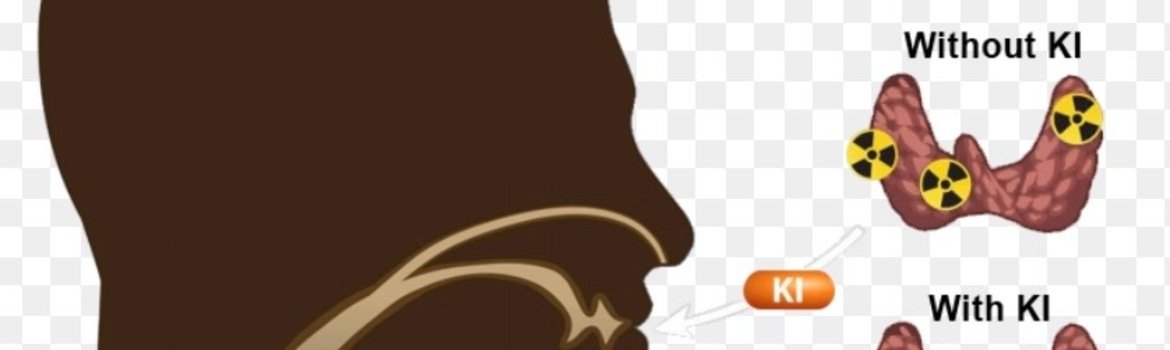
Potassium iodide is a stable (non-radioactive) iodine salt used to protect the thyroid gland from radioactive iodine exposure during radiation emergencies or nuclear incidents. The thyroid gland is the organ most sensitive to radioactive iodine, which is why its protection is especially important.
Potassium iodide does not prevent radioactive iodine from entering the body, but it blocks radioactive iodine from accumulating in the thyroid gland, thereby reducing the risk of radiation damage and thyroid cancer.
Important: Potassium iodide should be taken only when instructed by public health or emergency management authorities. Preventive or unsupervised use may be harmful.
Potassium iodide protects only the thyroid gland, not other parts of the body.
Potassium iodide does not protect against other radioactive substances, except radioactive iodine.
If radioactive iodine is not present, taking potassium iodide provides no benefit and may be harmful.
Table salt or iodine-containing dietary supplements are not substitutes for potassium iodide and do not contain sufficient iodine for protection.
Only officially approved medicinal products should be used.
The thyroid gland cannot distinguish between stable iodine and radioactive iodine and absorbs both. When potassium iodide is taken:
the thyroid gland becomes saturated with stable iodine;
for approximately 24 hours it cannot absorb additional iodine, including radioactive iodine;
this reduces the risk of radioactive iodine accumulation and thyroid injury.
Timing of intake – the earlier after exposure, the better the protection.
Absorption – how quickly potassium iodide enters the bloodstream.
Dose of radioactive iodine – the lower the exposure, the more effective the protection.
Infants are the most vulnerable group. They should receive only one dose of potassium iodide, as repeated dosing may disrupt thyroid function. If additional doses are required, medical supervision is necessary.
All children who are actually or potentially exposed to radioactive iodine are recommended to take potassium iodide, unless they have an iodine allergy.
Potassium iodide is recommended for this group, although their sensitivity to radioactive iodine is lower than that of children.
Potassium iodide also protects the fetal thyroid gland, as iodine crosses the placenta.
Only one dose is recommended.
If potassium iodide must be taken for more than one day, a doctor should be consulted.
Potassium iodide is generally not recommended for adults over 40 unless exposure to a very high dose of radioactive iodine is expected. This age group has a higher risk of adverse effects.
Approved forms of potassium iodide include:
tablets (65 mg and 130 mg),
oral liquid solution (65 mg/ml).
Newborns (0–1 month) – 16 mg
Children 1 month–3 years – 32 mg
Children 3–18 years – 65 mg
Adults – 130 mg
Pregnant and breastfeeding women – 130 mg (single dose)
One dose of potassium iodide protects the thyroid for approximately 24 hours. Higher or more frequent doses do not increase protection and may increase the risk of adverse effects.
Common side effects:
gastrointestinal discomfort,
skin rash,
allergic reactions,
inflammation of the salivary glands.
Rare but possible:
thyroid function disorders,
hypothyroidism in newborns, especially after repeated doses.
Store tightly closed, out of reach of children.
Store at room temperature, protected from light, heat, and moisture.
Dispose of unused medication through medicine take-back programs; do not flush down the toilet.
Potassium iodide is available without a prescription at pharmacies, but it should be used only when officially recommended by responsible authorities.