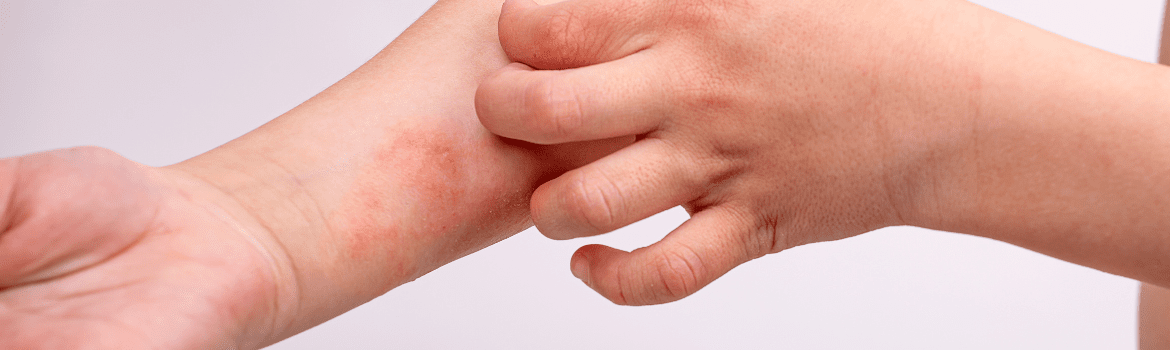
Eczema – What It Is and How to Maintain Skin Comfort in Daily Care
Eczema is a non-contagious, chronic inflammatory skin condition that is often associated with increased skin sensitivity and allergic reactions. It may present with various types of rashes, skin dryness, redness, flaking, and intense itching. Eczema symptoms often fluctuate and can be aggravated by environmental factors, climate changes, stress, or unsuitable skincare products.
One of the most common forms of eczema is atopic dermatitis, which is characterized by extremely dry, sensitive skin, itchy patches, cracks, and sometimes even open sores. Although eczema cannot be completely cured, a properly selected and consistently followed skincare routine can help reduce flare-ups, ease symptoms, and improve everyday well-being.
How to Build a Daily Skincare Routine for Eczema-Prone Skin
Proper skincare is one of the most important factors in maintaining skin comfort. In milder cases, dry skin may be the main or even the only symptom of eczema, and consistent moisturizing can effectively keep it under control. In more complex cases, additional measures or consultation with a specialist may be required, but the core skincare principles remain the same.
The main goals of a daily routine are:
Moisturizing – The Key Step
Moisturizing is an essential part of eczema care. It is especially important to apply a moisturizer immediately after washing, while the skin is still slightly damp.
According to the National Eczema Association (NEA), if a moisturizer is not applied promptly after bathing, the moisture present in the skin quickly evaporates, leading to increased dryness. To create a protective barrier that helps lock in moisture, it is recommended to apply a moisturizer within 3 minutes after stepping out of the shower or bath.
Showering and Bathing
For eczema-prone or dry skin, hot water should be avoided. Lukewarm water is the most suitable option, as it helps the skin absorb some moisture without damaging its protective barrier. It is also advisable to avoid scrubs, sponges, and other rough cleansing tools.
However, completely avoiding bathing is not recommended. According to the American Academy of Dermatology, bathing helps remove bacteria and dead skin cells and supports overall skin hygiene. In children, bathing can also contribute to emotional comfort and a closer bond with parents.
For dry or eczema-prone skin, it is recommended to:
-
bathe or shower for 5–10 minutes;
-
avoid prolonged exposure to water;
-
moisturize the skin immediately after bathing.
Identifying and Avoiding Triggers
Eczema flare-ups are often caused by contact with irritating factors. Therefore, it is very important to consciously observe what may negatively affect your skin. If triggers are not immediately clear, keeping a simple skincare diary—recording products used, environmental conditions, or dietary changes—can be helpful.
It is important to note that eczema flare-ups can be triggered not only by cosmetic ingredients, but also by:
During colder seasons, a richer and more intensive skincare routine is often necessary.
An Individual Approach to Skincare
Eczema manifests differently in each person, so there is no universal solution. What works well for one individual may not work for another. Dermatologists note that in some cases, skin condition may improve even with products not specifically designed for eczema, such as simple plant-based oils or petroleum jelly.
Once effective products are identified, it is recommended to note them down and maintain a consistent routine. This is especially important when caring for children with eczema, so that the routine can be continued by other caregivers if needed.
What to Include in Daily Care
Moisturizing is the most important step, but not all moisturizers are equally effective.
The National Eczema Association recommends:
Oils help to:
It is also important to use gentle cleansers that keep the skin clean without damaging its protective barrier.
Ingredients to Avoid
If you have eczema-prone skin, it is advisable to avoid products containing:
It is also worth paying attention to household irritants, such as:
Example of a Daily Skincare Routine
Morning
-
gentle cleansing with water or a very mild cleanser;
-
moisturizing immediately after washing;
-
protection from sun and cold.
During the Day
-
washing hands with a gentle soap;
-
moisturizing after each wash;
-
reapplying sun protection if needed.
Evening
-
gentle cleansing of the face and body;
-
intensive moisturizing;
-
using richer creams or ointments on problem areas;
-
choosing soft, non-irritating fabrics.
Key Takeaways
-
Moisturizing is one of the most important elements of eczema care.
-
Identifying and avoiding triggers helps reduce flare-ups.
-
A skincare routine should be individual and flexible.
-
If symptoms are unclear or more severe, consulting a dermatologist is recommended.